The “Perfect Face”: Why We’re All Chasing Something That Might Not Even Exist
Let’s be honest for a second. At some point, almost everyone has looked in a mirror, tilted their head a little, and wondered: am I close to perfect, or pretty far off?
I’ve wondered this too. And once I actually started digging into what scientists, surgeons, and even mathematicians have to say about it, I found something kind of surprising. The “perfect face” is a real thing people study seriously. But it’s also part myth, part marketing, and part something built into how our brains work without us even noticing.
So grab your coffee. Let’s walk through this together, slowly, the way you’d talk it out with a friend who just spent way too many nights reading research papers about why we find certain faces pretty.
Key Facts About “The Perfect Face”
| Topic | What You Should Know |
| Main mathematical idea | The Golden Ratio (also called Phi), roughly 1.618 |
| Where it comes from | Ancient Greek math, later applied to art, architecture, and eventually faces |
| Ideal face length-to-width | Often cited as about 1.6 (face is roughly 1.5 times longer than it is wide) |
| Who studies it scientifically | Evolutionary psychologists, biostatisticians, plastic surgeons |
| Two real scientific factors | Symmetry and averageness — these actually show up in research |
| Is the Golden Ratio scientifically proven? | No — many plastic surgeons call it oversimplified or a myth |
| Why averageness matters | Average faces may signal a wider, healthier genetic mix |
| Big modern complication | Social media filters and “Instagram Face” |
| Real mental health term | “Snapchat Dysmorphia” — wanting surgery to match a filtered selfie |
| Cultural truth | Beauty ideals shift across cultures and history — there’s no single universal face |
| Bottom line | Math can describe patterns in beauty, but it can’t fully explain or create it |
Where This Whole Idea Even Started
People have been obsessed with “perfect proportions” for thousands of years, way before Instagram existed.
The ancient Greeks loved a number called Phi, roughly 1.618, which we now call the Golden Ratio. They noticed this ratio showing up in shells, flowers, and even galaxies, and they started using it in architecture and art because it felt naturally pleasing to the eye.
Centuries later, Leonardo da Vinci drew his famous “Vitruvian Man,” mapping the human body using these same kinds of proportions. That drawing is basically the great-great-grandparent of every online “is your face perfect” calculator you’ll find today.
So this isn’t some random internet trend. It’s an old idea that just got a glow-up with modern technology.
See also ”Custom Vinyls: The Full, Honest Story of an Art Form That Refuses to Disappear”
How the “Perfect Face” Math Actually Works
Here’s the basic idea, stripped down to something simple.
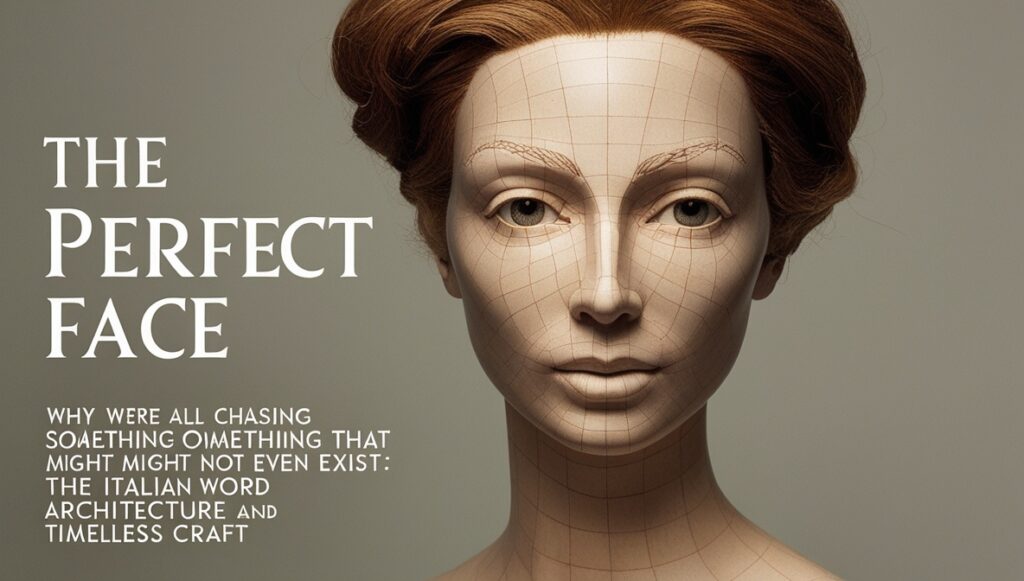
You measure your face length and divide it by your face width. If the answer is close to 1.6, that’s considered ideal under this theory. People also compare three sections of the face — forehead to eyebrows, eyebrows to nose tip, and nose tip to chin — and check if they’re roughly equal in size.
There are smaller details too, like comparing ear length to nose length, or eye width to the space between your eyes. The theory says when everything lines up close to that golden number, your face reads as more balanced to other people’s eyes.
It sounds neat and tidy on paper. But here’s the catch nobody tells you upfront.
Wait, Is This Actually Real Science?
This is where things get interesting, and honestly, a little messy.
I found plastic surgeons who openly say this whole idea gets oversimplified or even flat-out wrong in a lot of online content. One surgeon I read straight up called the Golden Ratio “one of the most persistent myths” in beauty and aesthetics, even though there’s a small kernel of truth buried inside it.
So what’s actually true? Mathematical ratios can describe some patterns that show up in faces people generally find pleasing. But they don’t create beauty, and they definitely don’t define it completely. Plenty of stunning, widely admired faces don’t hit that perfect 1.618 number on the nose.
Basically, the math is a rough sketch, not a blueprint.
The Two Things Science Actually Backs Up
If the Golden Ratio is shaky ground, what does real research actually support? Two things keep showing up again and again in serious studies: symmetry and averageness.
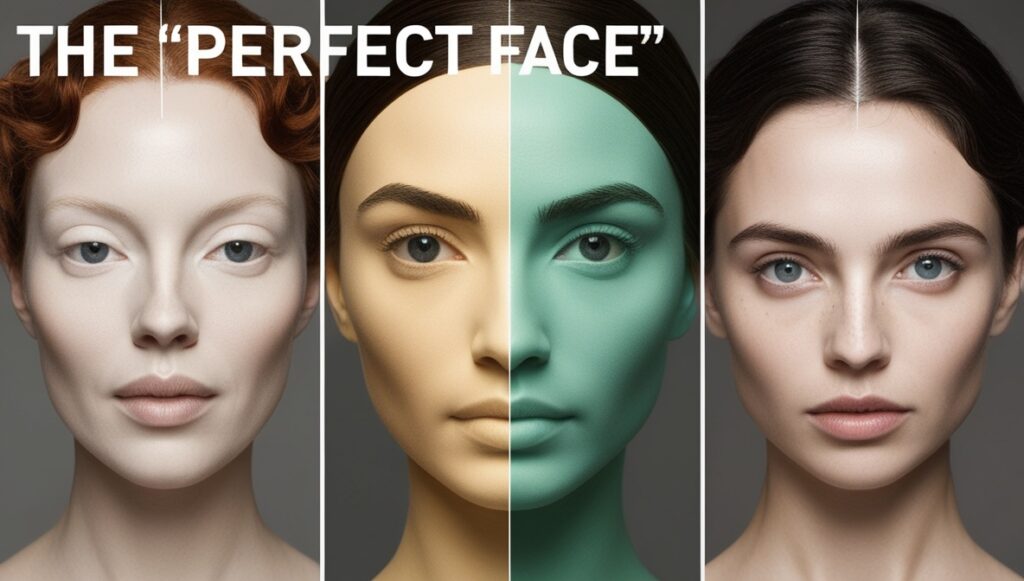
Symmetry means the left and right sides of your face roughly mirror each other. Researchers have found that more symmetrical faces tend to get rated as more attractive across different cultures, not just in one place. Scientists think this might connect to health — a face that developed evenly might hint at a body that grew up without major stress, illness, or genetic hiccups along the way.
Averageness is the more surprising one. This doesn’t mean boring or plain. It means a face that sits close to the typical pattern of a large group of faces, rather than having extreme or unusual features. Researchers have actually blended dozens of faces together using computers, and the resulting “average” face usually gets rated as more attractive than almost any single face that went into the mix.
That second point genuinely surprised me the first time I read it. It kind of flips the whole “unique is beautiful” message we hear so often, doesn’t it?
Why Would Our Brains Even Work This Way?
This is the part where evolution comes into the conversation, and I think it actually makes a lot of sense once you hear it.
Researchers studying this from an evolutionary angle think these preferences aren’t random. A symmetrical face might subtly signal good health and strong genes, since things like illness, poor nutrition, or developmental problems can sometimes show up as small asymmetries. An average face might suggest a wider genetic mix, which historically tended to mean a stronger immune system passed down to kids.
In other words, our attraction to symmetry and averageness might not be about beauty for beauty’s sake. It might be an old, quiet survival instinct, dressed up as “wow, they’re pretty.”
That doesn’t make it any less real or any less powerful. It just means there might be a much older reason behind it than fashion or culture.
Real Stories: What Happens When People Measure Their Own Faces
I came across stories of researchers actually measuring real people’s faces using these exact methods, and the results are honestly pretty relatable.
One biostatistician studies facial attractiveness using nearly thirty different measurements, the Golden Ratio being just one of them. She’s measured real faces, including well-known celebrities, and found that even widely admired faces rarely hit the “perfect” number exactly. They get close. Close enough to feel balanced to our eyes, but not mathematically flawless.
There’s also a researcher who found something genuinely useful for skincare and cosmetic work specifically: certain facial measurements, like the width of the nose and mouth and the space between them, naturally shift and widen a little as people age. That’s a real, practical detail that actually helps explain some of what people notice changing in their faces over time, totally separate from any “perfection” debate.
The Online Tools Everyone’s Suddenly Using
Lately there’s been a wave of free online tools where you upload a selfie and an AI tells you your “facial harmony score” against the Golden Ratio.
These tools measure your face length-to-width, eye spacing, nose shape, lip width, and symmetry, then spit back a score and sometimes a little overlay showing exactly where your features land compared to the “ideal.” Some even let you upload several photos to compare which angle or expression scores highest.
I’ll be honest with you about how I feel about these. They can be fun, almost like a quiz. But they’re also feeding people a number that claims way more authority than it should have. A computer measuring pixels on your face isn’t the same thing as truth about your worth or your looks.
Where Cosmetic Surgery Comes Into the Picture
Because the Golden Ratio idea has stuck around so long, plastic surgeons now genuinely use it as a reference tool, not gospel, when planning certain procedures.
Some surgeons use these proportions to help guide things like chin implants, buccal fat removal for more defined cheekbones, or facelifts meant to restore more balanced proportions as people age. Lip fillers sometimes follow a specific upper-to-lower lip ratio, since making both lips perfectly equal in size can actually look strange and unnatural, rather than improved.
But here’s an important warning one surgeon gave that stuck with me: leaning too hard on these formulas can create a kind of sameness. He specifically warned against surgery turning into an assembly line of nearly identical-looking faces, all chasing the same numbers instead of looking like themselves. His advice was refreshingly simple — aim to look like a better version of you, not a copy of a formula.
Where This Gets Personal: Filters and the New Pressure
Here’s where I think this topic stopped being just an interesting math puzzle and started becoming something genuinely worth caring about.
A term called “Snapchat dysmorphia” started showing up around 2018, coined by a cosmetic doctor who noticed something new happening in his office. Patients were bringing in their own filtered selfies and asking to look like that version of themselves, not a celebrity, not a model — their own digitally smoothed, slimmed, and brightened face.
Researchers have since connected heavy filter use to real anxiety, lower self-esteem, and even depression, especially in teenage girls and young women. The filters smooth skin, enlarge eyes, slim noses, and plump lips so consistently across different apps that researchers now describe a whole recognizable look called “Instagram Face” — high cheekbones, poreless skin, tiny nose, full lips, almost cat-like eyes.
The cruel part of this cycle is that people start comparing their real face to their own fake one. Not a stranger’s face. Their own edited face. That comparison can feel even harder to escape, because it’s wearing your own name.
The Misconceptions Worth Clearing Up
A few mix-ups keep popping up whenever this topic comes up, so let’s untangle them gently.
Some people think hitting that exact 1.618 ratio guarantees you’re objectively beautiful. Real research doesn’t support that at all — plenty of widely loved faces miss that number by a noticeable margin and are still considered gorgeous by nearly everyone who sees them.
Other people think “average” means plain or unremarkable. In facial research, it actually means something closer to balanced and typical, which our brains seem to read as comforting and trustworthy, not boring.
And a lot of people assume beauty standards are the same everywhere and have always been the same. They’re really not. What’s considered the ideal face shape, skin tone, or body type has shifted across history and still shifts wildly between cultures today.
How This Plays Out Across Different Cultures
Speaking of culture, this part deserves its own honest moment.
Some researchers argue that certain basic preferences — like clear skin and facial symmetry — do show up across many different cultures, possibly tied to health signals that matter everywhere humans live. But the specific details of an “ideal” face still vary a lot depending on where and when you look.
What one culture considers the most beautiful nose shape, eyebrow style, or skin tone can be totally different from another culture’s ideal, and both can be sincerely, deeply felt as beautiful by the people living inside that culture. There’s no single face shape that wins everywhere, every time, in every era.
That alone should be a little bit of a relief, honestly.
So What Are the Real Benefits of Understanding This Stuff?
I don’t think learning about facial proportions is pointless. There’s genuine value here if you take it the right way.
It can help you understand why certain photos of yourself feel more flattering than others — maybe it’s lighting, maybe it’s an angle that happens to highlight more natural symmetry. It can help cosmetic surgeons communicate more clearly with patients about realistic, balanced goals instead of vague wishes. And honestly, it can be kind of fun, in a curious, harmless way, like learning your blood type or your eye color genetics.
The benefit shows up when you treat this as interesting trivia about how human perception works, not as a verdict on your worth.
And the Real Drawbacks
But there are genuine downsides too, and I don’t want to gloss over them.
These tools and formulas can quietly convince people that there’s one correct face, and anything different from it is a flaw needing correction. That mindset feeds directly into the cosmetic surgery pressure researchers are already worried about, especially among younger people constantly comparing themselves to filtered images.
There’s also a deeper ethical question worth sitting with. If surgeons lean too heavily on one mathematical formula, are they helping people feel more confident, or are they slowly making everyone’s face look more similar? That tension between personal choice and cultural pressure doesn’t have one neat, comfortable answer.
Final Words
After going through all of this, here’s where I personally landed, for whatever it’s worth.
The Golden Ratio is a genuinely interesting piece of math history, and it’s kind of beautiful that ancient Greek thinking still echoes in plastic surgery clinics and Instagram filters today. But it was never meant to be a strict rulebook for human faces, and treating it that way misses the actual point.
What I find more comforting, honestly, is the averageness research. It suggests our brains are drawn to faces that feel familiar and balanced, not faces built from some impossible, narrow checklist. And symmetry research suggests our preferences might be older and gentler than vanity — possibly just an old instinct quietly checking for health and wellbeing in another person.
The filters and AI face-scoring apps worry me a little more. Not because curiosity is bad, but because so many people, especially teenagers, are using them as judges rather than just for fun. A number generated by an algorithm shouldn’t get to decide how someone feels stepping out the door each morning.
FAQs
1. Is there really a scientific “perfect face”?
Not exactly. Science supports some patterns, like symmetry and averageness, being linked to attractiveness, but there’s no single perfect face that everyone agrees on or that math can fully define.
2. What is the Golden Ratio in relation to faces?
It’s a mathematical proportion, roughly 1.618, that some people use to measure ideal facial proportions, like face length compared to width. It’s based on an old mathematical concept, not a strict biological rule.
3. Does my face need to match 1.618 exactly to be considered attractive?
No. Even widely admired, famous faces rarely match that number exactly. Being close is more meaningful than hitting it perfectly.
4. What does “facial symmetry” actually mean?
It means the left and right sides of your face are fairly similar to each other in shape and proportion. Research links higher symmetry to higher attractiveness ratings across multiple cultures.
5. Why would an “average” face be considered attractive?
Average faces blend together features from many different people, avoiding extreme or unusual traits. Some researchers think this may signal a healthier genetic variety, which our brains seem to find appealing.
6. Are “golden ratio face calculators” available online reliable?
They can give you a fun rough estimate, but they’re not scientifically precise tools for measuring real beauty or health. Treat them as entertainment, not as a verdict on your appearance.
7. Do plastic surgeons actually use the Golden Ratio?
Some do, as a general reference point for things like chin shape or lip volume ratios. Most responsible surgeons treat it as one guide among many, not as an absolute formula to follow strictly.
8. What is “Snapchat dysmorphia”?
It’s a term describing people who want cosmetic surgery to look like their own filtered selfies, rather than wanting to look like a celebrity or another real person.
9. Are beauty standards the same in every culture?
No. While some basic preferences, like clear skin, show up fairly widely, the specific ideal face shape, features, and proportions vary a lot between cultures and have changed throughout history.
10. Can social media filters actually affect mental health?
Yes. Research links heavy filter use to lower self-esteem, increased anxiety, and higher rates of body dissatisfaction, especially among teenage girls and young women.
11. Is wanting clear skin or symmetrical features considered vanity?
Not necessarily. Researchers suggest these preferences may connect to deep evolutionary instincts tied to perceiving health, rather than simple shallow vanity.
12. Why do some faces look more attractive in photos than others?
Lighting, angle, and expression can all highlight or hide natural symmetry and proportions, which is part of why the same face can look noticeably different from photo to photo.
13. Does having an “average” face mean looking plain or unremarkable?
No. In facial research, averageness refers to balanced, typical proportions, not blandness. Many people with average facial proportions are considered very attractive.
14. Should I be worried if my face doesn’t match the Golden Ratio?
Not at all. The vast majority of people, including widely admired celebrities, don’t match it exactly. Real attractiveness depends on far more than one mathematical formula.
15. What’s the healthiest way to think about facial “perfection”?
Treat ratios and formulas as interesting trivia about how human perception works, not as rules defining your worth. Real connection and attraction depend on personality, expression, and far more than measurements ever could.
See more, Know more, Understand more with Trend Explorer.