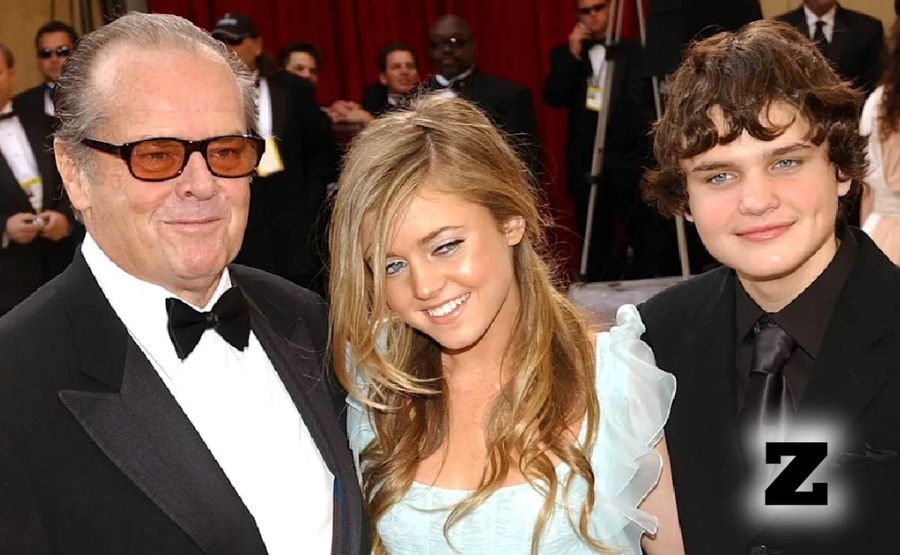
Caleb James Goddard: The Son Who Refused the Inheritance
Quick Facts
| Detail | Information |
| Full Name | Caleb James Goddard |
| Date of Birth | September 26, 1970 |
| Age (2026) | 55 years old |
| Birthplace | Los Angeles, California, USA |
| Biological Father | Jack Nicholson — three-time Oscar winner; denied paternity publicly until privately acknowledging Caleb (confirmed by Caleb in a 1996 People interview) |
| Mother | Susan Florence Anspach (November 23, 1942 – April 2, 2018) — actress; Five Easy Pieces (1970), Play It Again, Sam (1972), Blume in Love (1973) |
| Adoptive Stepfather | Mark Goddard — actor (Lost in Space); married Susan Anspach June 1970; adopted Caleb; marriage ended October 1978 |
| Maternal Half-Sister | Catherine M. Curry (b. October 15, 1968) — same mother, different father (Steve Curry, cast member of Hair) |
| Paternal Half-Siblings | Tessa Gourin, Ray Nicholson, Lorraine Nicholson, Jennifer Nicholson, and Honey Hollman |
| Education | Georgetown University, BA (1992); London School of Economics, MSc in International Political Economy |
| Career Phases | Entertainment (minor screen/production work, late 1980s–early 1990s); Broadcast journalism, CNN/Bloomberg TV Asia/Yahoo! (1992–c.2010s); U.S. Foreign Service Officer (2012–present) |
| Key Journalism Milestones | Founded CNN’s Hong Kong Financial News Bureau; Head of Programming, Bloomberg TV Asia; hosted first live internet news broadcast, Yahoo! |
| Diplomatic Posts | U.S. embassies in Guinea, Thailand, Pakistan, Brussels, Mauritius |
| Diplomatic Focus Areas | Hostage negotiations, elections, Ebola response, consular services, prisoner rights |
| Spouse | Karine Pouget (married c.1998) |
| Children | Two (son and daughter; names kept private) |
| Surname Origin | Adopted by Mark Goddard; retained the name into professional life |
| Net Worth (est.) | $700,000–$2 million (self-earned; no verified inheritance from Nicholson) |
| Mother’s Death | April 2, 2018, Los Angeles — coronary failure |
The Film That Made Everything Complicated
In 1969, director Bob Rafelson assembled the cast for Five Easy Pieces — a film that would become one of the defining American pictures of its era. Jack Nicholson anchored it as Bobby Dupea, a directionless classical pianist adrift in American blue-collar life. Susan Anspach played Catherine Van Oust, the woman whose steady intelligence exposed the hollowness beneath Dupea’s charm.
The roles fit the people uncomfortably well. Off-camera, the two began an affair. Anspach became pregnant during production. She was not Nicholson’s primary partner. He was not, by any available account, prepared to build a family with her.
On September 26, 1970, their son arrived in Los Angeles. Within weeks of the birth, Anspach had married actor Mark Goddard, star of the science-fiction series Lost in Space. Goddard adopted the infant. The child became Caleb James Goddard — carrying the name of a man who had not fathered him, in place of the name of a man who had not claimed him.
This was the condition of his entry into the world: a real parentage, a surrogate surname, and a silence that would persist for a quarter century.
A Mother Who Refused to Be Quiet
Susan Anspach was not a passive participant in the decades-long dispute over her son’s paternity. She was, by temperament and conviction, constitutionally unsuited to silence.
Her career had already demonstrated this. She marched alongside Cesar Chavez in support of the United Farm Workers. She protested South Africa’s apartheid. She was an actress who used her standing when she had it, and kept using her voice when the standing faded. The progressive commitments were not a posed-for-the-cameras affectation. They ran through her professional and personal life simultaneously.
When Vanity Fair published an article in the 1990s naming Ray Nicholson — Caleb’s younger paternal half-brother, born in 1992 — as Jack Nicholson’s eldest male child, Anspach wrote to the magazine directly. Her letter was precise and assertive: “Our son, Caleb, is Jack’s older son and second oldest child.” She went further: “Because Jack loves Caleb, I’m sure he would want me to have you make this correction.”
The letter was not made in anger. It was made in the tone of a woman stating a documented fact and expecting its correction. Nicholson’s response was not warm. He had maintained that Anspach had signed away her right to speak publicly about their shared child in exchange for a house she received, then later faced a protracted legal battle over repayment when she lost it. His lawyers, in documents published by the Los Angeles Times in 1996, argued the terms of the loan were legally unambiguous.
Anspach’s position was equally clear. She had been given a home by the father of her child. The conditions attached to that gift constituted, in her view, an attempt to purchase her silence about her son’s identity. She was unwilling to comply.
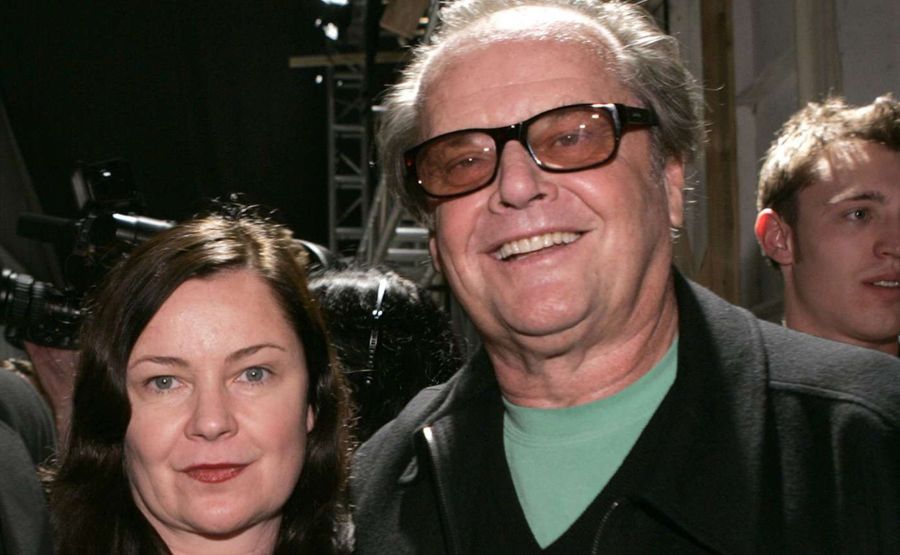
The Private Acknowledgment
The public record of Nicholson’s relationship with Caleb is a record of absence — no confirmation at press conferences, no joint appearances, no statements claiming paternity to reporters who regularly asked.
The private record is different.
In 1984, Nicholson gave a Rolling Stone interview in which he acknowledged the question without answering it cleanly. He said of Anspach: “She says that all the time. But because of the way she’s been toward me, I’ve never been allowed a real avenue to find out about it.” The framing blamed the mother without denying the child. It was the formulation of a man who had been given a legal off-ramp and was taking it.
But Caleb himself provided the corrective. In a 1996 People magazine interview — at age twenty-five — he stated plainly that Nicholson had privately acknowledged him as his son. The acknowledgment had come during a phone call in which Nicholson spoke critically of Anspach, using the occasion of personal friction with the mother to name the son for the first time. It was not a tender moment. It was an acknowledgment extracted from an argument. Yet it was real, spoken, and reported.
Nicholson is also confirmed to have paid for Caleb’s education — a Georgetown University tuition, which signals a level of financial commitment that goes beyond arm’s-length denial. The pragmatic support, offered without public declaration, was consistent with Nicholson’s pattern across multiple children born outside his primary relationships.
Education as Independence
Caleb Goddard graduated from Georgetown University in Washington, D.C., in 1992. Georgetown, founded by Jesuits in 1789, sits at the center of American foreign policy culture. Its School of Foreign Service has produced secretaries of state, ambassadors, intelligence directors, and presidents. The choice of institution was not incidental. It was directional.
He then crossed the Atlantic to the London School of Economics, where he completed a Master of Science in International Political Economy. The LSE’s IPE program sits at the intersection of political science and economics — a discipline that examines how financial systems shape geopolitical power, how trade relationships determine policy outcomes, and how global institutions mediate national interests.
The arc of his education — from a Jesuit university known for producing public servants to an institution whose language is the economics of power — traced precisely the professional path he was building toward.
By the time he returned from London, Caleb James Goddard had done something genuinely unusual for someone born in his circumstances: he had constructed an intellectual identity entirely detached from the name people associated with his face.
Journalism: Three Networks, One Career
Caleb’s journalism career began shortly after Georgetown and accelerated through the 1990s and early 2000s in the context of the most consequential transformation in broadcast history.
He joined CNN and worked to establish the network’s Hong Kong Financial News Bureau. Hong Kong in the early 1990s was at the center of one of the largest capital transfers in modern history: the negotiations over the 1997 handover from British to Chinese administration, combined with Asia’s broader emergence as a global economic engine. Building a financial news bureau there was not a routine assignment. It required understanding of regional finance, Chinese political economy, and the mechanics of live broadcasting in an environment where institutional relationships were in flux.
He moved to Bloomberg TV Asia, where he held the position of Head of Programming — a role that placed editorial and strategic responsibility for an entire regional broadcast operation in his hands. Bloomberg’s Asia operation in this period was expanding rapidly, serving an international investor audience whose decisions moved billions of dollars.
The third milestone was genuinely historical. At Yahoo!, in the late 1990s, Caleb hosted what was documented as the first live news broadcast ever delivered via the internet. This was not a technical footnote. In 1998 or 1999, streaming live video over the web was not a consumer habit — it was an experiment. The infrastructure was unstable. The audience was small by any contemporary measure. But the event established a precedent for what would eventually become the dominant medium for news delivery globally. Caleb James Goddard was physically present, on camera, for that inflection point.
Publicly, these achievements drew essentially no celebrity attention — they were professional accomplishments in a field that does not make stars of producers and bureau chiefs. In private, they represented an earned authority that required no family name to justify.
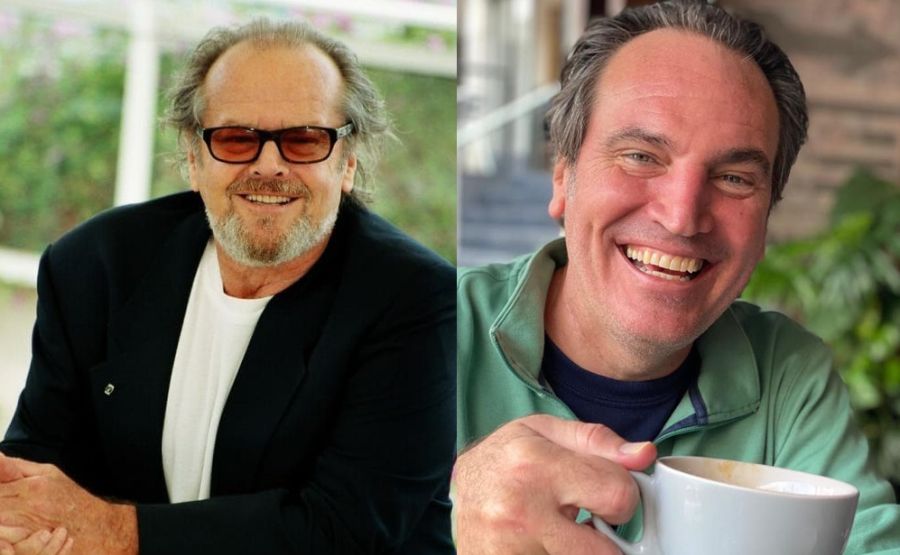
The Foreign Service: A Third Life
In 2012, at the age of forty-two, Caleb James Goddard made his most consequential career change. He joined the United States Foreign Service as an officer under the State Department.
The Foreign Service is not a comfortable career path. It demands geographic displacement, cultural fluency, functional competency in crisis, and the willingness to serve in places that do not attract journalists. Caleb’s assignments demonstrate this last point directly: U.S. embassies in Guinea, Thailand, Pakistan, Brussels, and Mauritius.
Guinea in particular was a posting that would define many Foreign Service careers. Between 2014 and 2016, the country was the epicenter of the West African Ebola epidemic — the largest outbreak of the virus in recorded history at the time, which killed over 11,000 people across Guinea, Sierra Leone, and Liberia. Caleb was working on consular services and public health response in a country where the epidemic was not a news story arriving from elsewhere. It was the immediate operational environment.
His work also extended to hostage negotiations — a discipline requiring extreme precision of language and judgment under conditions in which error is lethal — and election monitoring. The breadth of the assignments resists summary in a single characterization.
The Family He Built, the Mother He Lost
Caleb married Karine Pouget, a French national, around 1998. They have two children — a son and a daughter whose names and details he has maintained as strictly private. On social media, he has shared occasional photographs: children on a hoverboard with a dog, amusement park rides, the ordinary visual grammar of a family that has not agreed to be a subject for public consumption.
Susan Anspach died on April 2, 2018, at her home in Los Angeles, of coronary failure. She was seventy-five years old. Caleb confirmed her death and spoke publicly for what was, by most accounts, one of the few times he directly engaged with national press. His response to her passing was brief and decisive. He turned to Twitter to write: “I will miss you forever, Mom.” He directed those who wished to honor her to make donations to Amnesty International — an organization whose work aligned with the causes she had advocated throughout her life.
There was no long eulogy, no prepared statement, no organized media appearance. The expression was private in its scale, chosen in its form, and consistent with everything documented about how he navigates public life.
His father, Jack Nicholson, withdrew almost entirely from public life after his final film, How Do You Know, was released in 2010. They share the same distance from the current media moment — one through choice, one through age — and neither appears to have reversed course.
Legacy and Lasting Influence
Caleb James Goddard’s story does not fit the available templates for understanding celebrity offspring.
He is not a cautionary tale of squandered privilege. He is not a redemption narrative of a troubled child turned responsible adult. He is not a Hollywood dynasty figure continuing a lineage. He does not, by any verifiable measure, aspire to be any of these things.
What he represents, evaluated fairly, is something more structurally interesting: the exercise of choice against gravitational pull. The entertainment industry in Los Angeles is a powerful attractor. The Nicholson name, even when withheld, radiates enough cultural force to open doors without being spoken. The path of least resistance — toward representation, toward industry roles, toward the leveraging of proximity — was available to him at every stage.
He declined it, consistently and across decades.
His journalism career placed him at three genuine turning points in media history: the emergence of CNN’s international financial coverage in Asia, the buildout of Bloomberg’s regional editorial infrastructure, and the first live internet news broadcast. None of these roles required Jack Nicholson’s son to perform them. They required a Georgetown-educated, London School of Economics-trained professional with the institutional relationships to execute them.
His diplomatic career placed him in some of the most demanding operational environments available to a State Department official: active disease response, electoral monitoring in politically fragile states, and the precise, high-stakes practice of hostage negotiation.
These are not impressive by the standards of celebrity. They are impressive by the standards of a professional life.
Final Words
The question of Caleb James Goddard’s life — whether assessed as biography, as cultural analysis, or as a study of individual psychology — ultimately returns to the condition of his birth.
He arrived into a dispute. His mother claimed him publicly. His father denied him publicly. His stepfather gave him a name. His biological father privately acknowledged him decades later, under pressure, in the middle of an argument about the mother.
A different person, shaped by that origin, might have turned the dispute into an identity. Might have sought resolution through confrontation, or through performance, or through the accumulation of a public life that would force an overdue accounting. Caleb Goddard appears not to have done any of these things.
What he did instead was build. He built an education. He built a journalism career at pivotal moments in the development of international and digital media. He built a diplomatic career in the State Department’s most demanding postings. He built a family and kept it private with evident deliberateness.
The irony embedded in this life is not subtle. Jack Nicholson spent fifty years constructing one of American cinema’s most recognizable public identities — a persona so dense and legible that it colonized the cultural memory of three generations. His son spent fifty years constructing the opposite: a professional record of genuine, documented achievement that most people searching his name will not find because they are looking for the wrong story.
That is not a tragedy. It is a choice. And choices, made consistently across decades, are the only thing that ultimately deserves to be called character.
FAQs
1. Is Caleb James Goddard definitively Jack Nicholson’s son?
By the weight of public evidence, yes. Susan Anspach consistently stated it throughout her life. Caleb himself confirmed in a 1996 People interview that Nicholson privately acknowledged paternity. Nicholson never confirmed it publicly, but paid for Caleb’s Georgetown education — a practical acknowledgment that exceeded formal denial. His IMDB biography states he is Susan Anspach’s son and that “his parents are Hollywood actors.”
2. Why does Caleb use the surname Goddard rather than Nicholson?
His mother married actor Mark Goddard weeks after his birth in 1970. Goddard adopted Caleb, making the legal change to the Goddard surname formal. The adoption lasted through the marriage’s end in 1978. Caleb carried the name professionally and personally thereafter.
3. What were Caleb’s actual roles in entertainment?
He appeared in one episode of the TV series The Slap Maxwell Story (1987) and worked as a location manager on the 1991 film Guilty as Charged. These constitute his entire documented entertainment industry credits.
4. What did Caleb study at Georgetown University?
He graduated in 1992. Georgetown’s curriculum for students entering global careers typically spans political science, international economics, languages, and philosophy. His subsequent MSc at the London School of Economics in International Political Economy confirmed his academic direction.
5. What is the significance of Caleb hosting the “first live internet news broadcast”?
In the late 1990s, streaming live video over the internet was technically and logistically experimental. His participation at Yahoo! placed him physically at one of the first demonstrations of what became the standard format for news delivery globally. The event predates widespread broadband adoption.
6. Which countries did Caleb serve in as a Foreign Service Officer?
Confirmed posts include U.S. embassies in Guinea, Thailand, Pakistan, Brussels (Belgium), and Mauritius. He joined the State Department as a Foreign Service Officer in 2012.
7. What work did he do during the Ebola crisis in Guinea?
Guinea was the epicenter of the 2014–2016 West African Ebola epidemic. His embassy work during that period involved public health response alongside standard consular services, placing him in operational proximity to one of the most severe disease outbreaks in recent history.
8. Did Caleb have a close relationship with Jack Nicholson?
By multiple accounts, the relationship was distant but not hostile. Nicholson provided financial support for education. Caleb’s confirmation of private acknowledgment suggests some direct communication. No evidence of a close paternal bond exists in the public record.
9. When did Susan Anspach die, and how did Caleb respond?
Susan Anspach died on April 2, 2018, in Los Angeles, from coronary failure, aged seventy-five. Caleb confirmed her death publicly and posted “I will miss you forever, Mom” on Twitter, redirecting well-wishers to Amnesty International in her memory.
10. Who is Caleb married to, and do they have children?
He married Karine Pouget, whose name is sometimes rendered Katerine in secondary sources. The marriage is estimated to have begun around 1998. They have two children — a son and a daughter — whose names and details Caleb has kept consistently private.
11. What is Caleb Goddard’s estimated net worth, and how was it earned?
Estimates range from $700,000 to $2 million. His income comes from his journalism career at CNN, Bloomberg TV, and Yahoo!, and from his U.S. government salary as a Foreign Service Officer. No verified inheritance from Jack Nicholson is documented.
12. Who are Caleb’s paternal half-siblings?
Through Jack Nicholson: Jennifer Nicholson (born 1963, with actress Sandra Knight); Honey Hollman (born 1981/82, with model Winnie Hollman, raised in Copenhagen); Lorraine Nicholson (born 1990) and Ray Nicholson (born 1992), both with actress Rebecca Broussard; and Tessa Gourin (born 1994, with Jennine Gourin), who wrote publicly in 2023 that she and Nicholson have no relationship.
13. What is Caleb’s maternal half-sister’s name?
Catherine M. Curry, born October 15, 1968, to Susan Anspach and Steve Curry, a cast member of the Broadway musical Hair. She was also adopted by Mark Goddard during Anspach’s marriage.
14. Why does Caleb maintain such consistent privacy?
He has not explained this preference publicly. The pattern is consistent across all three phases of his career — entertainment, journalism, and diplomacy — and predates the social media era. It may reflect the experience of growing up in the center of a contested and public family dispute, a formative condition that makes the privacy of ordinary life feel like an achievement rather than a default.
See more, Know more, Understand more with Trend Explorer.